© 2020. panebruno - tel. 393 9474234 - info@panebruno.it - P.I. 05676390965
About us
Pane Bruno is organic
Pane Bruno is naturally leavened with sourdough
Pane Bruno is a "living" food
The ingredients used and all the production phases are controlled and certified by the control body authorised by the Ministry (in our case Suolo e Salute).
On the product complying with the rules is labelled "Organic" which means the absence of preservatives, chemical additives and synthetic and transgenic substances; respect for nature with processing methods that do not alter the ecosystem. The label also shows the EU logo, the origin of the raw materials (EU/non-EU), the number of the operator and the number of the control body.
Pane Bruno is handmade
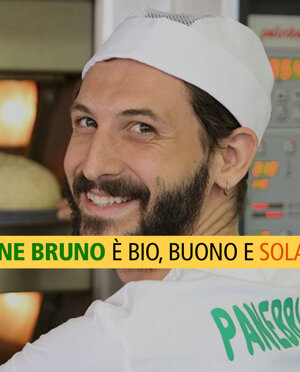
The various stages of production are done by hand and the whole process is controlled every day by the artisan at every stage of production: from the kneading of the dough, to the rising, the sizing of the loaves, the baking and the packaging.
This bread is baked in an oven powered by solar energy
The workshop is a prefabricated wooden construction with a very low environmental impact and energy saving. The decision to bake the bread in an oven powered by solar energy rather than wood is also part of this "green" logic. Wood is a very expensive resource in energy terms because it is slowly renewable.
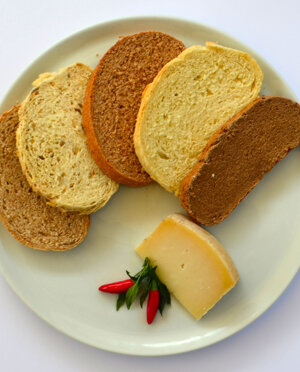
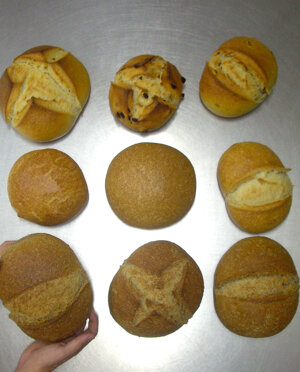
In order to keep its characteristics intact as much as possible, we advise you to keep it cool in the fridge and before eating it, to warm it slightly to make it more fragrant and aromatic. In this way, you can have several types of bread at your disposal and eat the one that best suits your taste and health needs every day. Each loaf is sliced and packaged in a transparent film and is available in different sizes and flours.
No brewer's yeast is used. The brewer's yeast normally used is a concentrate of yeasts belonging to the unique strain of Saccaromyces Cerevisiae, the leavening is carried out by this yeast solely through "alcoholic fermentation" which transforms the simple sugars present in the flour into carbon dioxide and alcohol. The gas is retained by the 'glutinous mesh' developed by the flour proteins during kneading and thus creates the alveoli of the crumb. In contrast, the rising of dough with sourdough takes place with both alcoholic fermentation and other side fermentations such as acetic and lactic fermentation. The long fermentations of sourdough reduce most of the starch to simple sugars and also reduce the proteins to amino acids. The result is great digestibility because the enzymatic action of the sourdough causes simpler molecules to be formed that do not need to be digested by our bodies. This leavening also allows the bread to keep longer (up to a week) because it slows down the development of mould.
© 2020. panebruno - tel. 393 9474234 - info@panebruno.it - P.I. 05676390965